
Sunset with the Cranes
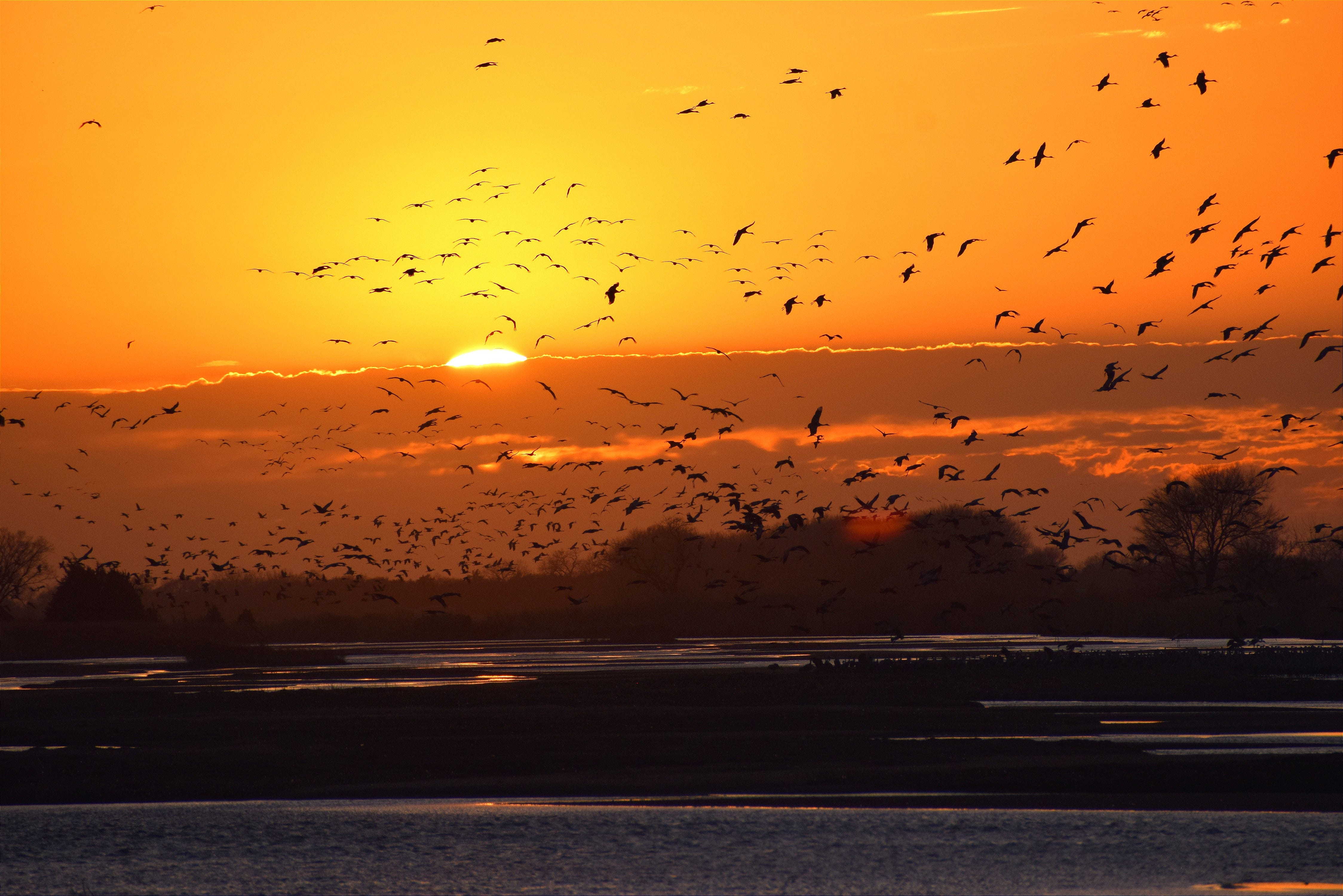
Last week I had the opportunity to spend two different sessions in a blind in Nebraska to watch the annual Sandhill Crane migration. I witnessed both a morning and an evening session in a camouflaged blind and both experiences were special in their own right. This post is about the sunset viewing experience.
After leaving their overnight safe stay in the riverbed, the cranes spend all day foraging in the adjacent farms within four miles of the Platte River - fattening up for the breeding season on the waste grain left in the fields.
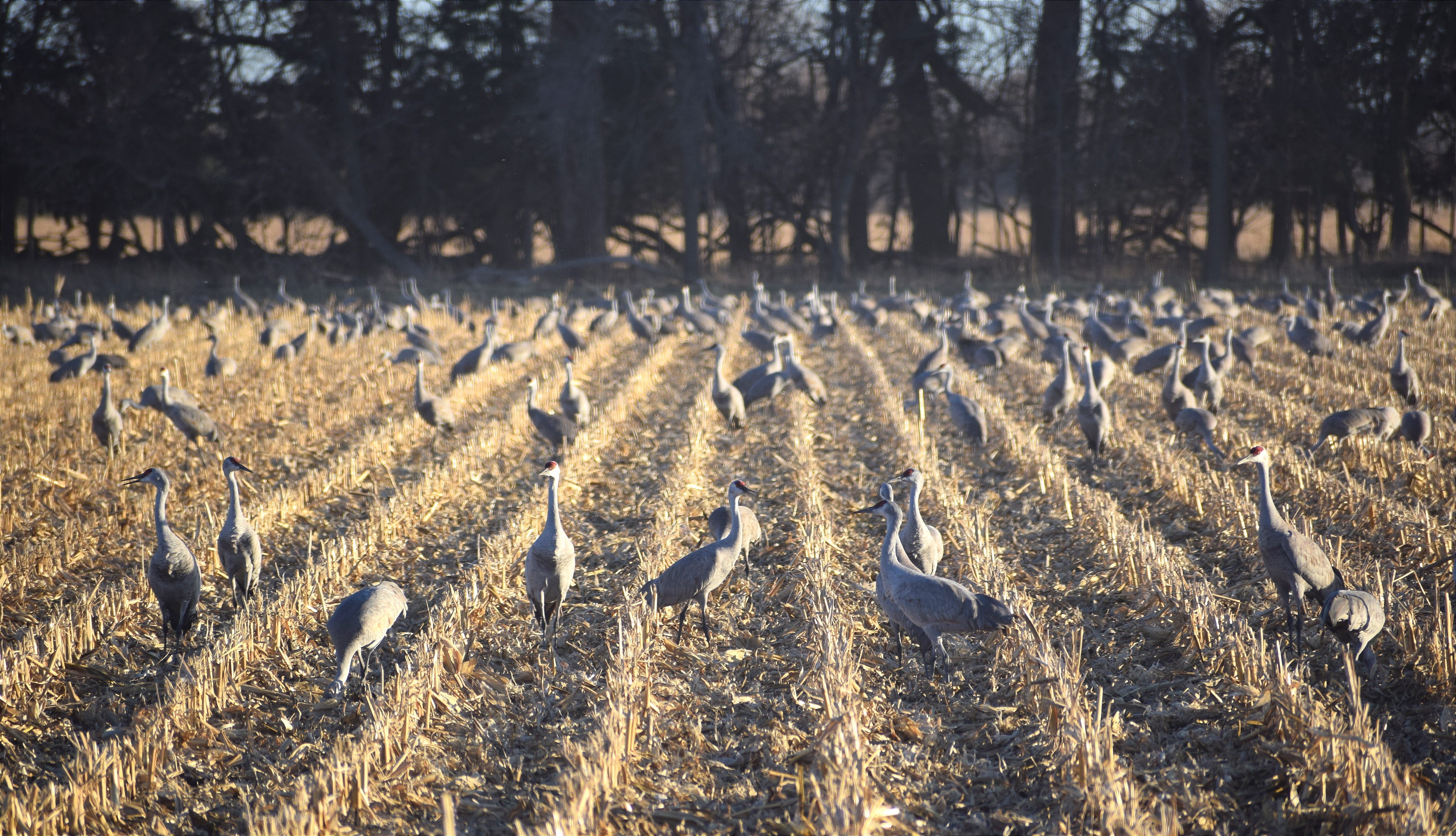
Fortunately the cranes migrate through here before the fields are planted so their feeding does not damage the local crops. The abundance of agricultural areas combined with habitat restoration has helped boost the long-term population of these impressive birds.
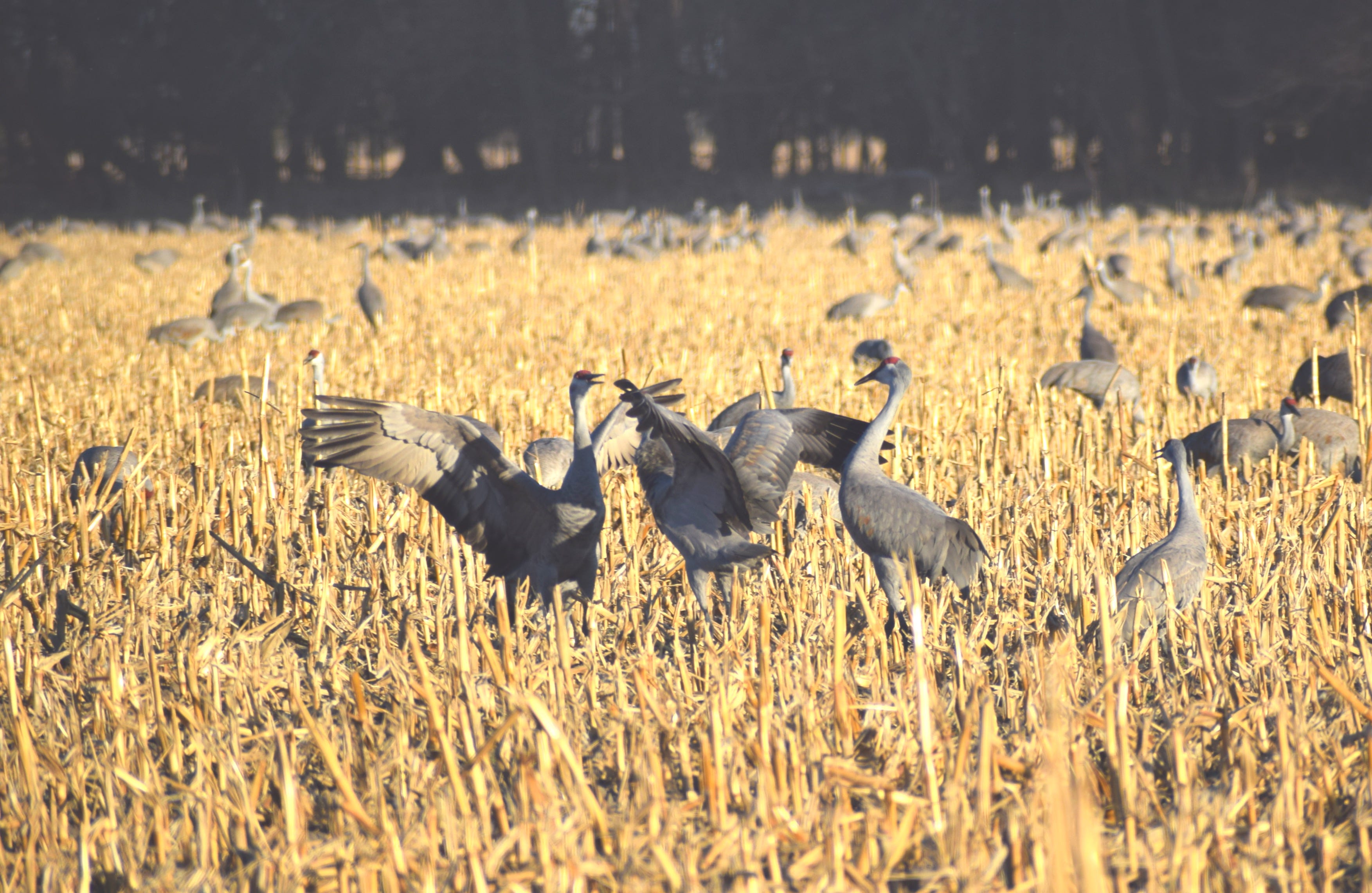
About an hour before sunset, the Sandhills start heading back to the River for the night. All persons scheduled to observe in the evening blinds must be set up before the birds arrive.
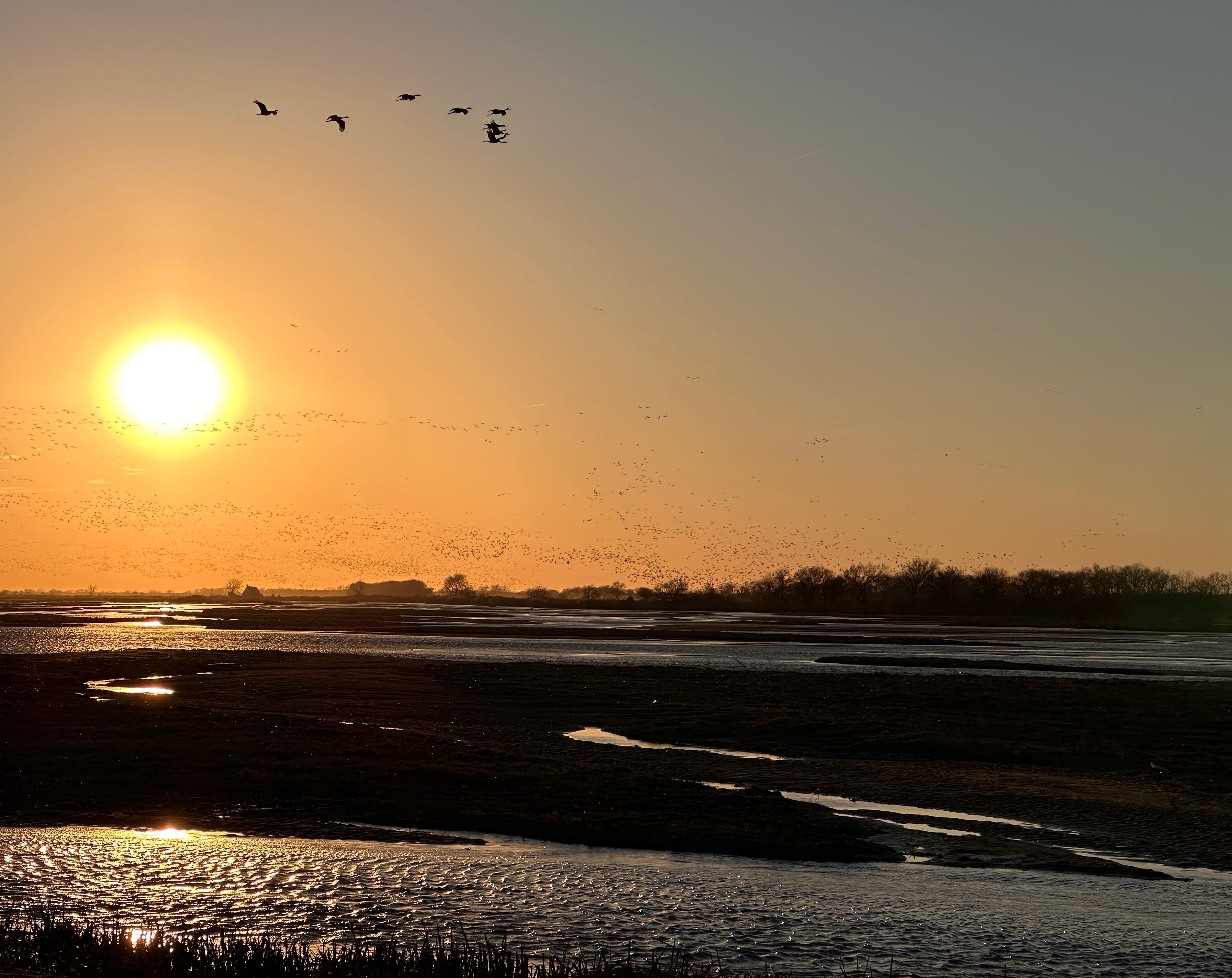
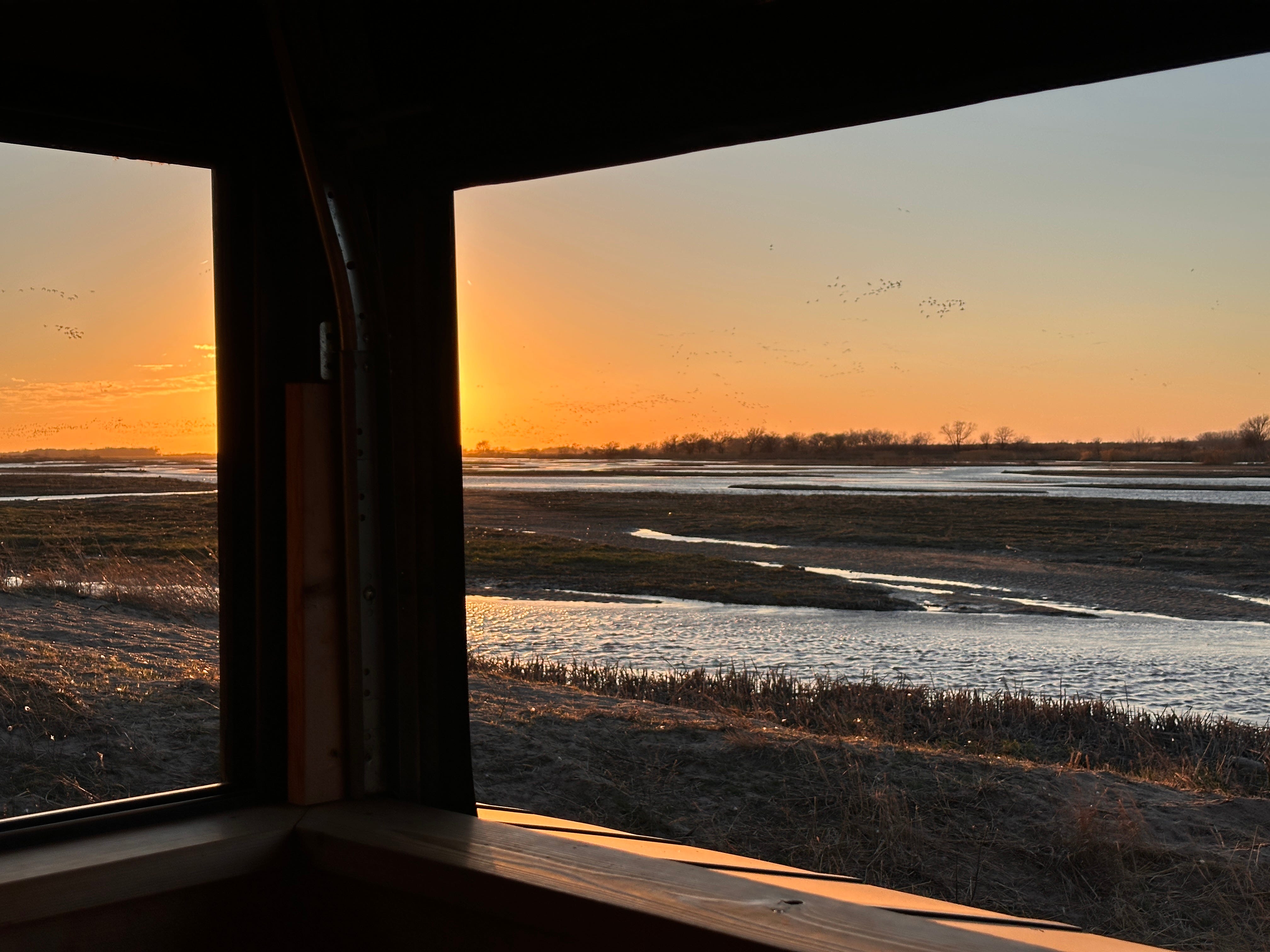
And very shortly the show begins with the first groups flying in and checking out the riverbed.
When coming in, the cranes act very skittish - no one wants to land first. Finally one brave bird makes the move to land which then triggers the flock to all start piling in.
It is mesmerizing to watch so many large birds - in such an incredibly large gathering - maneuver and land within inches of one another. There are layers of groups coming in all directions and somehow they seem to make it look orderly every night. Plus on this occasion they had 30 mph wind gusts coming upriver to contend with.
As they continued to land nearer to the blind, I was able to get some close up video of their landing styles. Some cranes land like we would expect, flying in low horizontally before pulling up to brake with their wings to slow down to land. And then there is the other style - the graceful “parachuting” straight down with wings fixed, heads up and legs extended down - all the while making subtle body changes to adjust to the conditions. It looks like they are just dropping down locked in a standing position.
The spring sunsets in Nebraska are beautiful due to the wide vista and airborne dust creating a palette of colors.
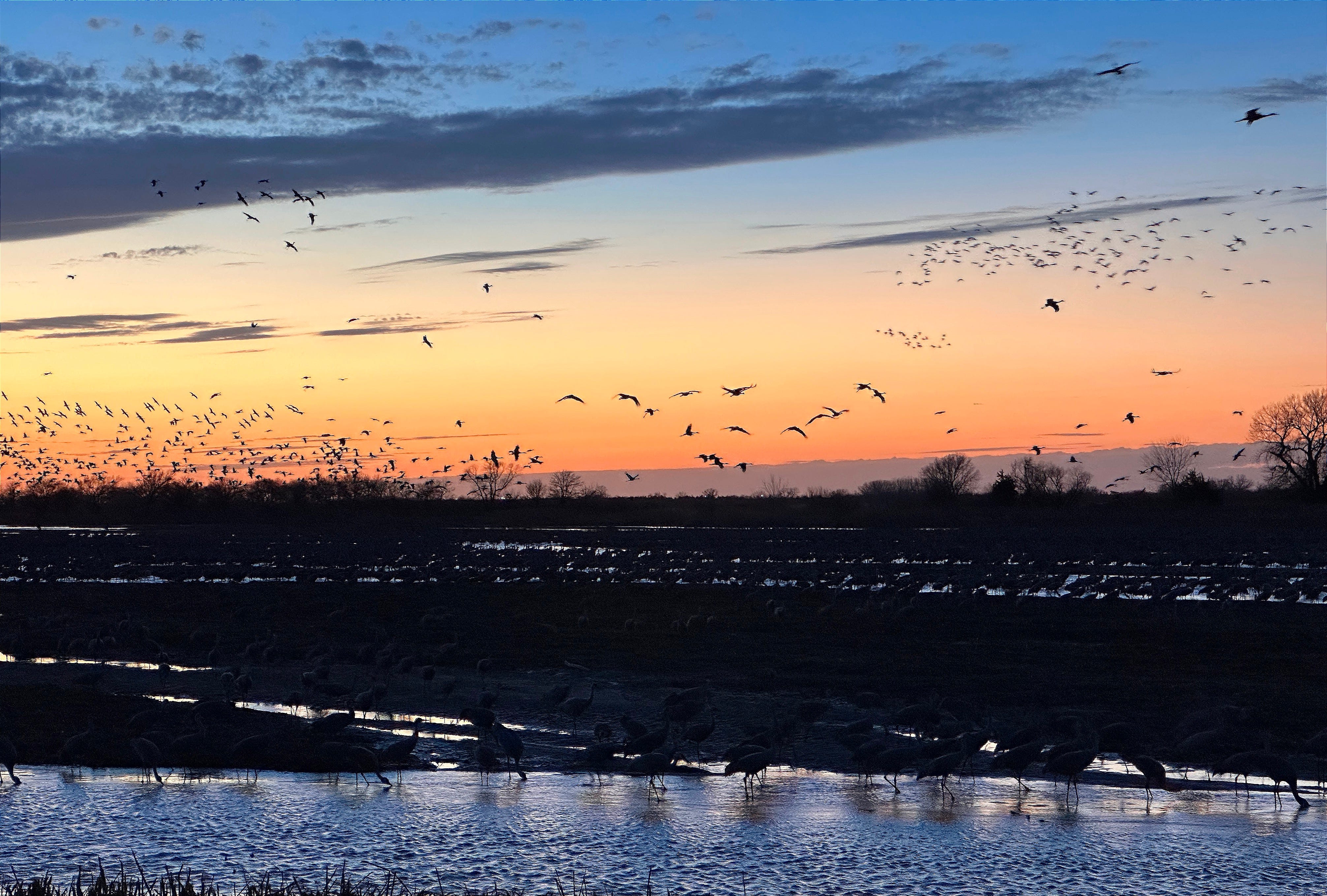
At a certain point after sunset, we had to stop photographing in order to not scare the cranes. Bright lights from smart phones and cameras could disturb the birds just like in the pre-dawn moments of the morning session. This is last video before we stopped and just watched the cranes continue to come in and land even closer to our blind. It was a heavenly end to a perfect day!
Thank you for sharing. I'm so glad you got that experience!
Superb--I felt I was there. Thank you, Liz